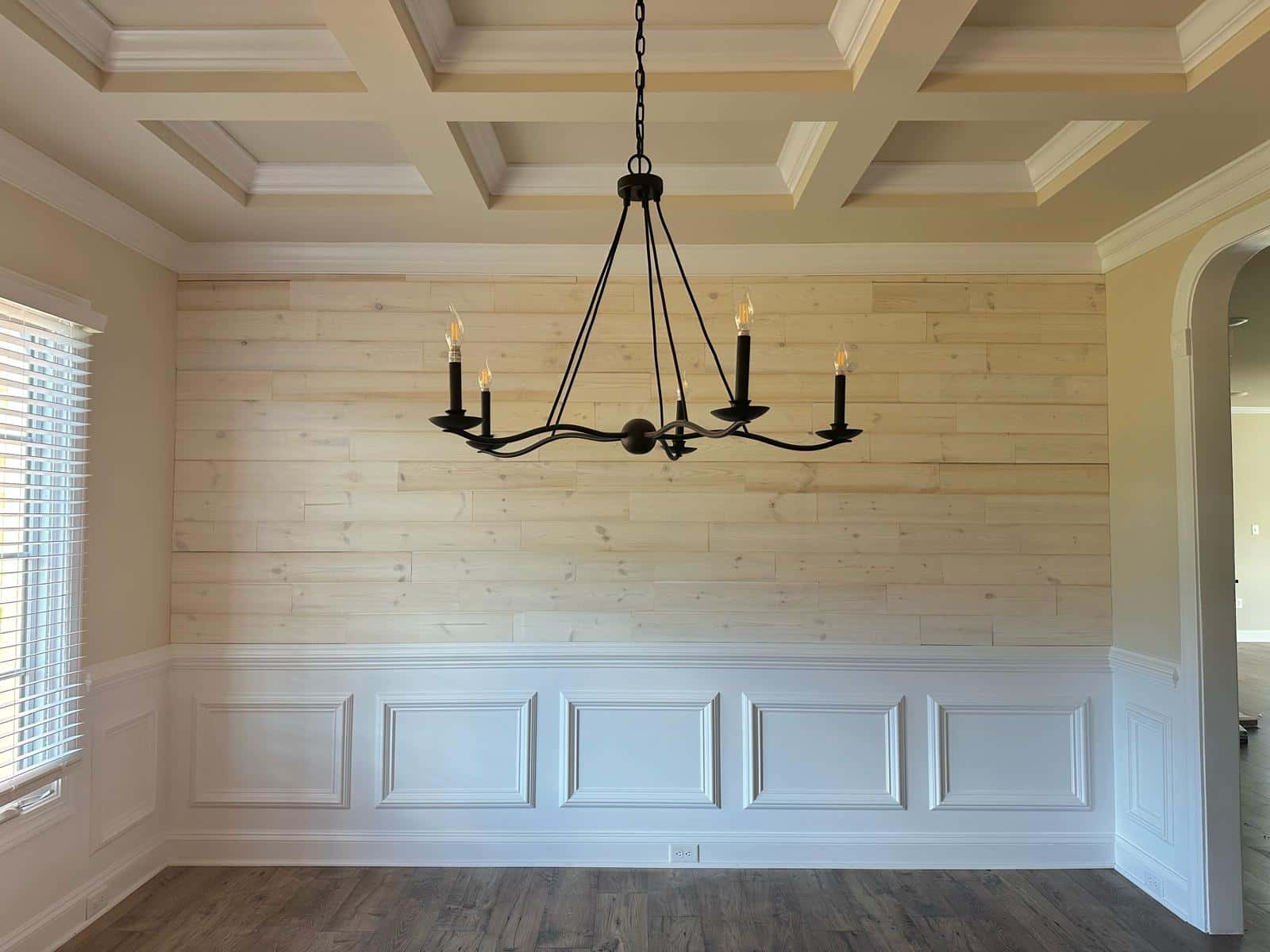
Trim & Finish Carpentry in Richmond, VA
The details that make a house feel like a custom home — delivered with expert precision.
Why Choose MAS Contractors?
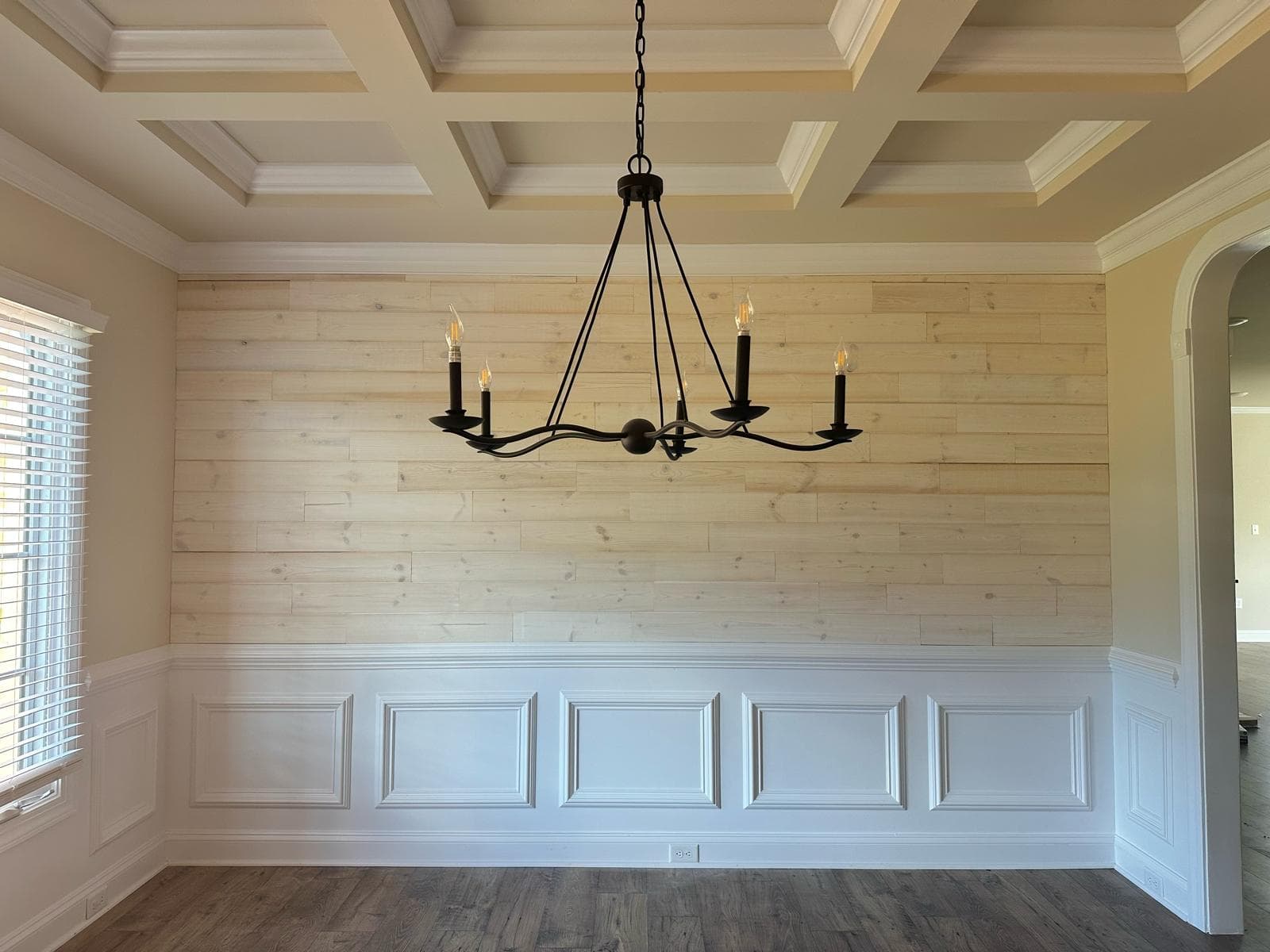
Trim carpentry is what separates a standard renovation from a truly custom home. MAS Contractors LLC installs crown molding, coffered ceilings, wainscoting, built-in shelving, and custom millwork throughout Richmond, North Chesterfield, and the surrounding area — with the attention to detail that makes every corner and transition look intentional.
Our carpenters are skilled in both paint-grade and stain-grade work, and can match existing profiles or create entirely new designs. From simple base molding to elaborate coffered ceilings and library-style built-ins, we deliver finish carpentry that adds lasting value and character to your home.
- Crown molding installation
- Coffered ceiling design & installation
- Wainscoting & board & batten panels
- Custom built-in shelves & entertainment centers
- Interior door casing & base trim
- Staircase rail & baluster replacement
- Custom woodworking & millwork
- Chair rail & picture rail molding
Our Process
Free On-Site Consultation
We walk through your home, photograph existing profiles, discuss your design goals, and review the full scope and timeline with you.
Profile Selection & Design
Choose molding styles, built-in layouts, or custom millwork designs. We source standard profiles or have custom profiles milled to match your home.
Measurement, Milling & Prep
All materials measured, cut, and prepped before arriving on-site — minimizing dust, disruption, and time in your living space.
Installation & Paint-Ready Finish
Every piece installed with precision, nail holes filled, joints caulked, and surfaces sanded — handed off ready for your painter.
11+
Years of Experience
500+
Projects Completed
100%
Satisfaction Rate
Always
Free Estimate
Cost & Timeline Guide
$3 – $15 per linear foot
Most projects: $2,500 – $8,000 per room (custom built-ins higher)
1 – 5 days
Permit review may add time to some projects
What Affects Your Cost
- Profile complexity (simple base vs. elaborate crown)
- Paint-grade (MDF/poplar) vs. stain-grade (oak/maple) material
- Number of rooms and linear footage
- Custom built-ins or millwork included
- Ceiling height and accessibility requirements
What Every Homeowner Should Know
Common Challenges
Out-of-Plumb Walls and Uneven Ceilings
Virtually every wall and ceiling in a lived-in Virginia home has some degree of deviation. Crown molding that looks straight at one end will have visible gaps at the other if the room isn't carefully scribed. Back-cutting and coping corners to the actual surface is essential craft.
Matching Historic Profiles
Richmond has a large stock of pre-1960 homes with custom millwork profiles that were milled locally and no longer exist in catalog form. Matching them requires sourcing a custom knife and running the profile in small quantities — a specialty most contractors don't offer.
Wood Movement in Virginia's Humidity
Solid wood trim moves 1/8" to 3/16" seasonally as humidity swings from 30% in winter to 80%+ in summer. Nailing schedules, joint gaps, and caulking technique must account for this movement to prevent nail pops and opening joints within the first year.
Compound Miter Cuts on Cathedral Ceilings
Crown molding on vaulted or cathedral ceilings requires compound miter cuts — simultaneously angled in two directions. The math changes based on wall angle and crown spring angle, and getting these cuts right requires experience, dedicated jigs, and test cuts before touching finished material.
Pro Tips from Our Team
Acclimate all wood trim in the space for 48–72 hours before installation — solid wood brought directly from a dry warehouse into a humid Virginia home will expand and cause joint opening within weeks.
Prime all MDF cut ends immediately after cutting — unpainted MDF edges absorb moisture and swell noticeably, especially at base trim near exterior walls.
Use flexible paintable caulk at every inside corner and wall junction — paint without caulk will crack at these joints as the house moves seasonally.
Build coffered ceiling frames on the floor where possible, test-fit them dry, then lift the assembled grid into position — dramatically faster and more accurate than building in place on a ladder.
Never rely solely on construction adhesive for crown molding — always nail AND glue. Adhesive alone can't handle wood movement and seasonal stress over time.
Safety Equipment on Every Job
Frequently Asked Questions
Other Services in Richmond, VA


Ready for Your Free Estimate?
Serving Richmond, North Chesterfield, Midlothian, Glen Allen, and Henrico. Licensed, insured, and ready to start.